
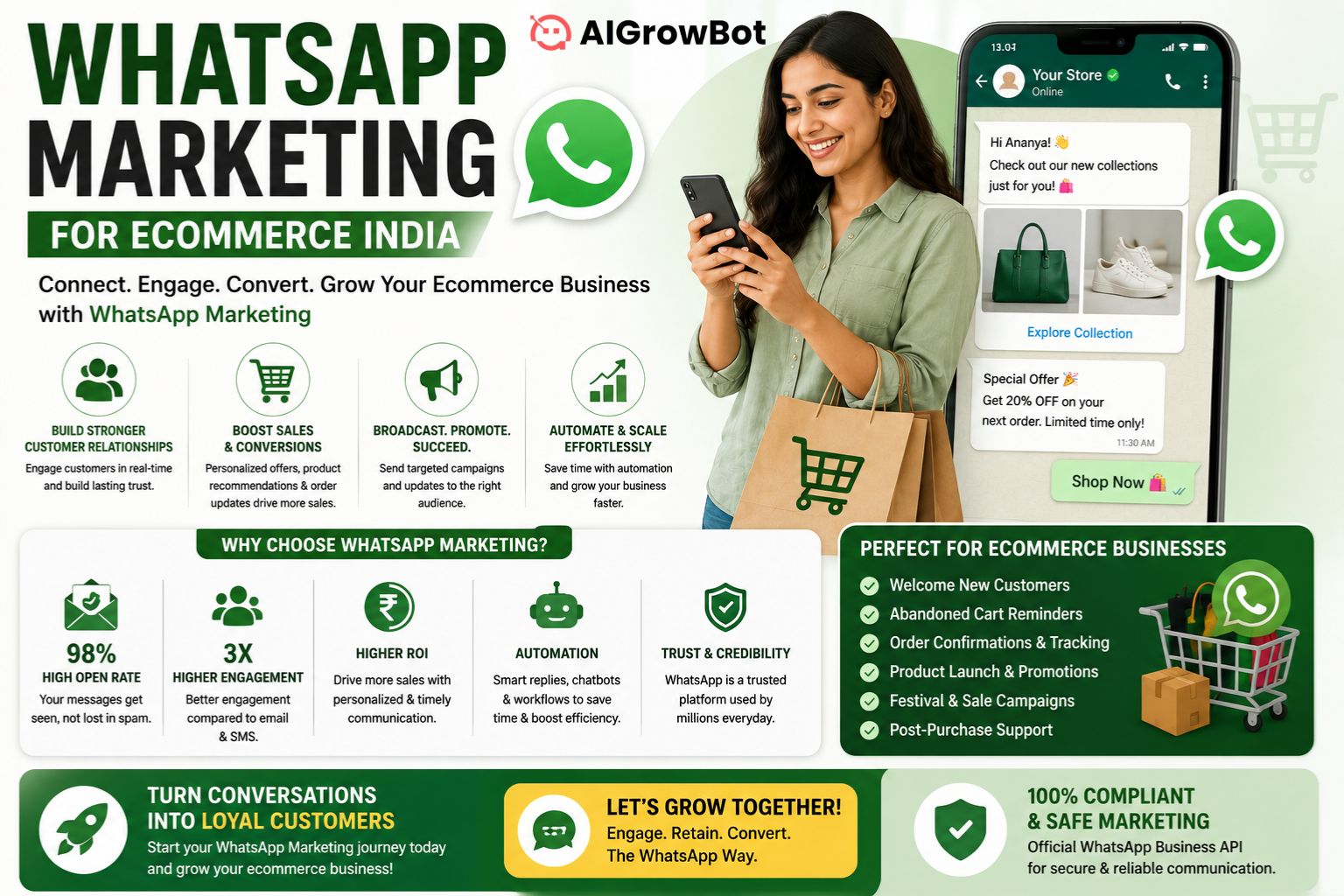
Introduction The Growing Influence of WhatsApp in India
WhatsApp has become a dominant communication tool in India. Millions of people use it daily. Its simple interface appeals to users from all age groups. For ecommerce businesses, this platform holds immense potential. The widespread use of WhatsApp opens doors to direct conversations with customers. Sharing updates, order alerts, and offers becomes effortless on WhatsApp.
The mobile-first nature of Indian consumers adds to WhatsApp’s importance. Most online shoppers in India use smartphones. WhatsApp’s presence on nearly every device allows ecommerce brands to connect instantly. This deep integration makes the app a powerful marketing tool for online stores.
Why Ecommerce Brands Should Use WhatsApp Marketing
Ecommerce in India is growing quickly. Customers want quick and clear communication. WhatsApp marketing helps businesses meet this demand. It enables fast two-way messaging. Customer queries can be answered in real time. Special offers can be sent directly to buyers. This boosts engagement and encourages repeat sales.
The platform also supports multimedia messages. Brands can send product images, catalogs, and videos. This makes promotion more engaging than traditional SMS or email. Businesses can use WhatsApp’s broadcast list feature to reach multiple customers at once. This saves time and increases efficiency.
Key Features That Benefit Ecommerce
WhatsApp offers features designed for business use. The WhatsApp Business app provides automated responses, labels, and catalogs. These tools help ecommerce brands organize conversations and respond faster. Labels let stores track order status or group customers by interest. Catalogs allow for easy product browsing within the chat itself.
Security and privacy are also strong points for WhatsApp marketing. Messages are encrypted, building trust between brands and customers. This encourages users to share concerns or feedback, leading to better relationships. With these features, WhatsApp becomes an essential part of modern ecommerce marketing in India.
Understanding WhatsApp Marketing What is WhatsApp Marketing?
WhatsApp marketing refers to using the WhatsApp messaging app to promote products and services. Ecommerce brands in India can use WhatsApp to connect with customers directly on their smartphones. It involves sending messages, images, videos, and product catalogs through personal or business accounts. WhatsApp marketing helps brands build relationships and drive sales by offering a more personal touch than traditional channels.
WhatsApp Business provides tools like automated greetings, quick replies, and labels. These features help ecommerce businesses manage customer interactions effectively. Companies can create business profiles with essential information and showcase products. Using WhatsApp for ecommerce in India is growing because of its wide reach and user familiarity.
Key Features and Tools for Ecommerce
WhatsApp Business API supports large-scale customer engagement for bigger ecommerce brands. This allows for sending notifications, order updates, and customer support at scale. Features like broadcast lists enable sending promotional messages to many users at once. Catalogs make it easy for brands to display products directly in chats. This streamlines shopping and inquiry processes for customers.
The following table summarizes key WhatsApp marketing features for ecommerce in India:
Feature Description Broadcast Lists Send messages to multiple contacts at once Catalogs Showcase products and allow direct inquiries Automated Replies Respond instantly to common questions Labels Organize chats for easy follow-up and segmentation Order Notifications Update customers about order status and shipping
Using these tools, ecommerce companies can offer support, guide purchases, and promote new arrivals.
Benefits of WhatsApp Marketing for Indian Ecommerce
WhatsApp marketing supports real-time communication, building trust with Indian consumers. Customers value instant responses to inquiries about products, orders, and returns. Personalized messages can increase engagement and repeat purchases. Sharing promotions and exclusive deals via WhatsApp drives more conversions than traditional SMS or email.
Many Indian ecommerce businesses use WhatsApp marketing to reduce cart abandonment. Sending reminders or discount codes directly to users helps recover lost sales. The platform’s end-to-end encryption also assures customers about the privacy and safety of their communication.
Strategies for Effective WhatsApp Marketing Personalization and Segmentation
Personalization helps connect with customers. Use customer names in messages. Segment your audience by interests, location, or purchase history. Segmented lists allow you to send relevant updates or offers. This increases response rates and builds trust. Automation tools support personalized messaging at scale.
A simple table can help visualize segmentation:
Segment Message Example New Customers Welcome offer, how-to guides Repeat Buyers Loyalty discounts, restock alerts Abandoned Carts Reminder with product image Location-Based Local event invites, store offers
Use tailored content for each group. Make sure your campaigns align with customer needs. The right message to the right person at the right time leads to higher conversions.
Rich Media and Interactive Content
WhatsApp supports images, videos, catalogs, and voice notes. Share high-quality images of products to engage users. Short demo videos can showcase product features and benefits. Rich media increases interest and drives action.
Interactive content makes campaigns more engaging. Use quick reply buttons for feedback or order confirmations. Run polls or quizzes to gather insights. These tools boost customer interaction and help you learn about your audience.
Always use clear calls to action in every message. Guide users on next steps, such as visiting your website or contacting support. Consistent and interactive communication builds loyalty over time.
Timely Updates and Automated Reminders
Send updates on order status, delivery, and special sales. Timely notifications keep customers informed. Automated reminders help recover abandoned carts and encourage repeat purchases. Set up scheduled messages for important occasions or seasonal campaigns.
Automation saves time for your team and ensures quick responses. Tools like chatbots handle FAQs or basic support. Customers receive immediate answers, improving their experience. Integrating WhatsApp API with ecommerce platforms streamlines this process.
Use analytics to track performance. Monitor open rates and responses. Adjust your strategy based on data to maximize results.
Case Studies of Successful WhatsApp Marketing Apparel Brand Drives Repeat Purchases
A leading apparel brand in India used WhatsApp marketing to boost its e-commerce sales. The brand created segmented broadcast lists based on purchase history and customer preferences. They sent out personalized product recommendations and early access offers through WhatsApp. Engagement rates were significantly higher than email campaigns. More than 25% of recipients clicked on product links, and repeat purchase rates improved over two months. Customers appreciated the instant updates and convenience.
The brand also automated post-purchase messages to gather feedback and encourage reviews. This helped the brand collect over 15,000 new reviews in a single quarter. The strategy resulted in a 40% increase in customer retention. With WhatsApp, the brand maintained a personal touch while scaling their outreach.
Electronics Retailer Boosts Flash Sale Success
An electronics retailer launched limited-time flash sales exclusively on WhatsApp. Customers who opted in received early notifications about the deals and special discounts. The retailer used rich media messages with product images and direct purchase links. Flash sale notifications sent via WhatsApp achieved a 70% open rate. This was much higher than their social media or SMS notifications.
A/B testing revealed that time-limited offers performed best when sent during peak shopping hours. The retailer reported a 30% lift in traffic to their mobile site during campaigns. Sales conversion rates from WhatsApp users were also 50% higher than other channels. Customers cited the simplicity and speed of the purchase process as key reasons for participating.
Beauty Brand Enhances Customer Engagement
A popular beauty brand integrated WhatsApp into its e-commerce marketing funnel. They offered live chat support and beauty consultations through WhatsApp. Customers could share photos and receive product recommendations in real-time. This one-on-one engagement increased customer trust and loyalty.
The brand also used WhatsApp to share order updates, shipping notifications, and exclusive content. Customers reported higher satisfaction due to the proactive communication. The brand saw a 35% rise in repeat purchases over six months. By leveraging WhatsApp, the beauty brand delivered a seamless and engaging shopping experience.
Brand Strategy Results Apparel Brand Segmented promotions, feedback collection 40% retention, 25% CTR, 15,000 new reviews Electronics Co. Flash sale alerts, rich media messages 70% open rate, 50% higher conversion rates Beauty Brand Live chat, order updates 35% rise in repeat purchases Conclusion Key Takeaways for Ecommerce Brands
WhatsApp marketing has become essential for ecommerce businesses in India. It enables brands to reach customers quickly. Companies can use WhatsApp to send order updates, promotions, or personalized recommendations. This builds trust with buyers and drives repeat purchases. The high open rates on WhatsApp make it a productive channel for customer engagement. Brands can leverage features like catalogs, broadcast lists, and quick replies to streamline communication.
Automation tools help manage large customer bases on WhatsApp. For example, chatbots can answer common questions and help guide shoppers. The ability to send images, videos, and product links adds value for users. When used well, WhatsApp marketing can support sales, improve satisfaction, and increase brand loyalty.
Best Practices for WhatsApp Marketing
Respecting customer privacy is crucial for success. Brands must get opt-in consent before sending messages on WhatsApp. It is important to send relevant information and avoid spamming users. Personalized messages make customers feel valued. Timing also matters; sending messages at the right times leads to better results. Use WhatsApp Business API for scalability and automation.
Segmenting your audience allows for tailored promotions. Ecommerce brands should track metrics like read rates, reply rates, and conversions. Testing new campaigns and analyzing the results helps in optimizing strategies. Always ensure that support is available for customer queries, either through agents or chatbots. A well-trained support team on WhatsApp can reduce friction and resolve issues faster.
Future Outlook for Ecommerce and WhatsApp
The future of WhatsApp marketing in India looks promising. More consumers are using mobile messaging apps for shopping and customer support. Integration of payment services in WhatsApp will streamline purchase experiences. Advanced analytics and AI-driven tools can further enhance personalization and targeting.
Ecommerce businesses should continue to adapt to changing trends and consumer behaviors. Staying updated with WhatsApp's features gives brands a competitive edge. As technology evolves, WhatsApp marketing will remain a key part of digital strategies for ecommerce India.