
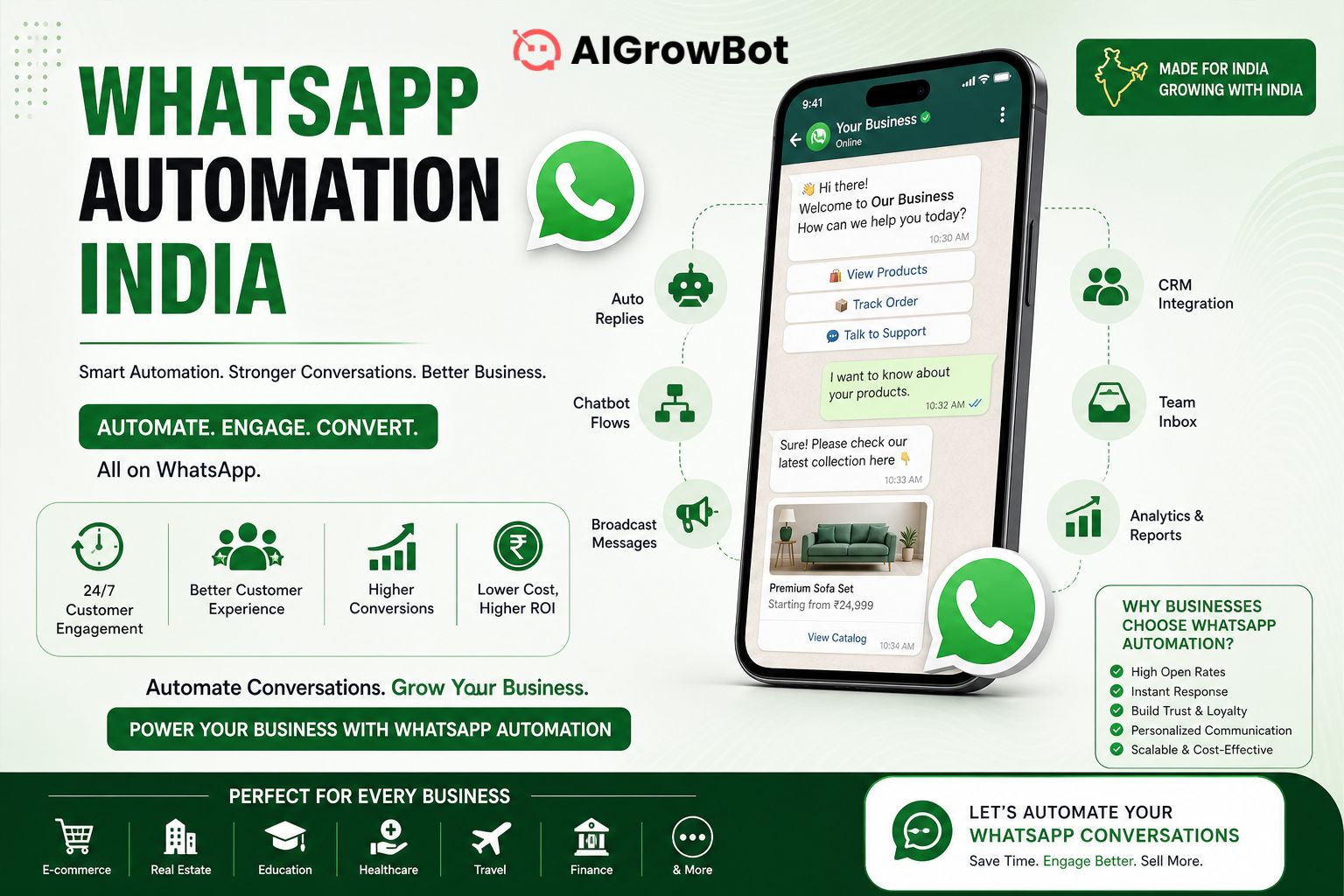
Introduction to Whatsapp Automation Understanding Whatsapp Automation
Whatsapp automation uses technology to streamline messaging tasks on WhatsApp. Businesses use automation tools to send messages, schedule broadcasts, and manage customer queries. This approach saves time and improves efficiency for both small and large companies in India.
In simple terms, WhatsApp automation allows companies to interact with customers without manual effort. Automation handles repetitive communication, ensuring consistency and speed. It is now a key part of customer engagement strategies across industries in India.
Whatsapp automation also supports various business functions. Common uses include sending order confirmations, reminders, and promotional content. Organizations use these tools to keep customers informed and engaged.
Why Whatsapp Automation Matters in India
India is one of the largest markets for WhatsApp, with millions of active users. Businesses in India use Whatsapp automation to reach customers where they are most active. Automated solutions help organizations provide instant responses and 24/7 support.
Whatsapp automation has become essential for Indian enterprises competing in crowded markets. Automated messaging improves response times and customer satisfaction. Companies can handle a higher volume of inquiries with the same resources.
The popularity of WhatsApp in India makes automation a logical choice for customer communication. It enables brands to build trust and deliver timely information. As a result, more businesses are investing in WhatsApp automation solutions.
Key Features of Whatsapp Automation Tools
Whatsapp automation tools offer a range of features designed for Indian businesses. These include message scheduling, chatbot integration, and analytics. Table 1 outlines common features and their benefits:
Feature Benefit Bulk Messaging Send updates to multiple contacts Chatbots Automate replies to common questions Message Templates Ensure consistent communication Scheduling Plan messages at optimal times Analytics Track campaign performance
Whatsapp automation solutions are flexible and scalable. Businesses can customize them to suit specific needs. This adaptability supports growth and improves the overall customer experience.
Key Features of Whatsapp Automation Seamless Customer Communication
Whatsapp automation allows businesses to engage customers instantly through chatbots and automated responses. Customers get quick answers to frequently asked questions, order updates, and support queries. This instant assistance improves satisfaction and helps reduce response time.
Interactive message templates let companies send personalized updates, reminders, and notifications. Customers can reply with pre-set options, which makes interactions smooth and error-free. Automation ensures every message maintains a consistent brand voice.
Efficient Campaign Management and Analytics
Automated workflows enable businesses to schedule marketing campaigns on Whatsapp. Messages reach users at optimal times, increasing engagement. Bulk messaging features allow companies to share promotions, product launches, and event reminders to segmented lists.
Whatsapp automation solutions in India offer analytics dashboards to track campaign performance. Metrics include message delivery status, open rates, and customer interactions. Businesses use this data to refine their strategies and measure ROI.
Feature Benefit Bulk Messaging Reach many users at once Scheduling Deliver at best times Analytics Measure campaign success Segmentation Target groups precisely Advanced Integration and Security
Most Whatsapp automation platforms support integration with CRM and helpdesk software. This enables a unified customer database and smooth data flow between systems. Businesses can automate lead capturing and follow-ups directly from Whatsapp chats.
Security is a priority in Whatsapp automation India solutions. End-to-end encryption ensures that all customer data and conversations remain private. Compliance with local data protection regulations helps businesses build trust with their customers.
Benefits of Implementing Whatsapp Automation in India Enhanced Customer Engagement and Service
Whatsapp automation in India transforms how businesses interact with customers. Automated messages allow instant responses to queries, helping businesses provide 24/7 support. Indian companies can offer timely updates and confirmations through Whatsapp automation, leading to improved customer satisfaction. This boost in engagement also helps businesses build loyalty and trust with their audience.
Many customers in India prefer using Whatsapp for communication due to its popularity and ease of use. With automation, businesses can reach their customers where they are most active. This leads to higher response rates and more meaningful conversations, which can increase overall customer retention.
Operational Efficiency and Cost Reduction
Automating routine Whatsapp tasks significantly reduces manual workload in Indian businesses. Employees spend less time answering repetitive questions, allowing them to focus on higher-value activities. Automated flows can handle order confirmations, appointment bookings, and basic support queries efficiently.
The reduction in manual intervention leads to cost savings for small and large businesses alike. Companies can serve more customers without increasing staff size. This is especially useful for startups and SMEs looking to grow quickly in India’s competitive market.
Benefit Impact Reduced Workload Employees focus on critical tasks Lower Costs Fewer resources needed for support Scalable Operations Easy to manage high message volumes Improved Marketing and Sales Conversions
Whatsapp automation in India enables personalized and timely marketing messages. Businesses can segment their audience and send targeted offers or reminders. This personal approach increases the chances of conversions compared to generic mass messaging.
Automated follow-ups and cart reminders help recover abandoned purchases, boosting sales for e-commerce and retail businesses. By integrating Whatsapp automation with CRM tools, companies can track customer journeys and refine their sales strategies. This results in better lead nurturing and higher revenue growth for Indian businesses.
Challenges and Considerations Compliance and Regulatory Issues
WhatsApp automation in India faces strict compliance requirements. Businesses must follow guidelines set by WhatsApp, RBI, and Indian data privacy laws. Data security is a key concern. Sensitive customer data must be protected under the Information Technology Act. Non-compliance can result in heavy penalties and loss of customer trust. Companies need to stay updated with changing regulations. This requires dedicated resources for monitoring and ensuring compliance.
Regulatory frameworks keep evolving in India. Businesses must adapt their WhatsApp automation platforms quickly. Each industry could have specific rules for messaging and data retention. For example, banks and healthcare providers face even tighter regulatory controls. It is vital to understand sector-specific rules before automating WhatsApp communication.
Technical and Operational Challenges
Integrating WhatsApp automation with existing systems is complex. Legacy systems may not easily connect with WhatsApp's API. Technical glitches can disrupt communication and service delivery. Companies need skilled IT teams to manage integration, testing, and troubleshooting. Continuous monitoring helps ensure stable and reliable communication.
Businesses must also address message delivery issues. Network instability, device compatibility, or changes in WhatsApp policies may affect message flow. Many small businesses lack the resources to overcome these operational barriers. Automation platforms should support scalability, regular updates, and local language messaging.
Technical Challenge Impact API Limitations Restricts advanced automation capabilities Network Instability Delays or failure in message delivery Data Sync Issues Inconsistent customer information Version Incompatibility Errors with different device/software versions Customer Experience and Ethical Concerns
Automated WhatsApp messages risk being flagged as spam. Over-automation can annoy users or make communication impersonal. Striking the right balance between automation and human support is essential. Customers expect quick, relevant, and personalized interactions. Businesses must avoid repetitive or irrelevant messages.
Ethical considerations also play a role. Using customer data responsibly is mandatory. Transparency about data usage builds trust. Customers appreciate when businesses offer easy opt-out options and respect user preferences. Following ethical best practices boosts the reputation and success of WhatsApp automation initiatives in India.
Conclusion and Future Outlook Summary of Whatsapp Automation in India
Whatsapp automation in India is shaping how businesses interact with customers. Companies are now using this technology to manage customer queries, automate order confirmations, and send reminders. This reduces manual work and speeds up response times. Businesses gain a competitive edge by adopting these tools. Indian startups and established brands use Whatsapp automation to personalize communication. This helps them reach a wider audience quickly and efficiently. Automation also supports better data collection and analysis, leading to improved marketing strategies.
Whatsapp automation works well with other digital solutions. Many Indian companies use it alongside CRM and ERP platforms. This integration streamlines workflow and reduces errors. Companies can also deliver targeted offers and notifications to customers. As a result, this boosts engagement and increases sales opportunities.
Opportunities and Challenges Ahead
The future of Whatsapp automation in India holds great promise. More sectors, including healthcare and education, are starting to use these tools. Brands can automate appointment reminders, fee notifications, and feedback collection. However, there are challenges to address. Data privacy and compliance must be top priorities for businesses using automation.
There is also a need for ongoing investment in technology and staff training. As Whatsapp updates its policies, Indian companies will need to adapt quickly. Staying updated with rules ensures smooth use of automation tools. Collaboration with chatbot developers and solution providers will be essential.
Trends to Watch
AI-powered chatbots are improving the quality of Whatsapp automation in India. New features like natural language processing and multilingual support are making customer interactions smoother. Businesses are exploring voice-enabled automation to cater to non-English speaking users. This trend will likely continue as technology evolves.
To stay ahead, Indian businesses should keep track of new Whatsapp features and updates. Investing in automation will remain crucial for growth. The evolving digital landscape means companies must be flexible and innovative when adopting Whatsapp automation tools.